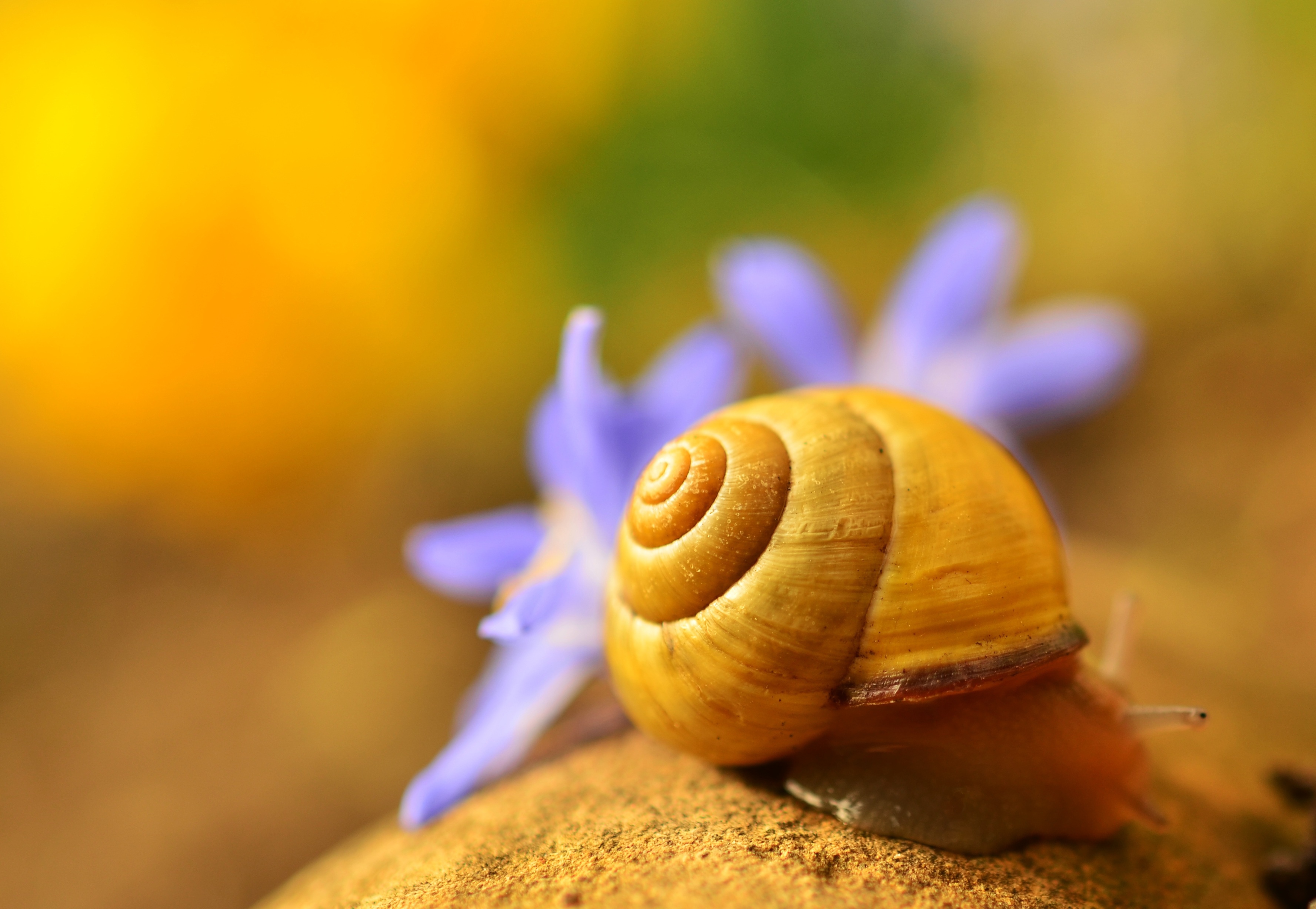
Before humans built spiral staircases, nature was already winding them. The shell of the snail in the photo above grows in a logarithmic spiral — a shape that adds width as it turns, so the animal never outgrows its own house. It is the same principle behind an efficient spiral staircase.
Why nature keeps choosing the spiral
A spiral packs a long path into a tiny footprint. Shells, ram's horns, sunflowers and even galaxies use it because it is strong and space-efficient: every new turn simply continues the previous one, with no wasted corner.
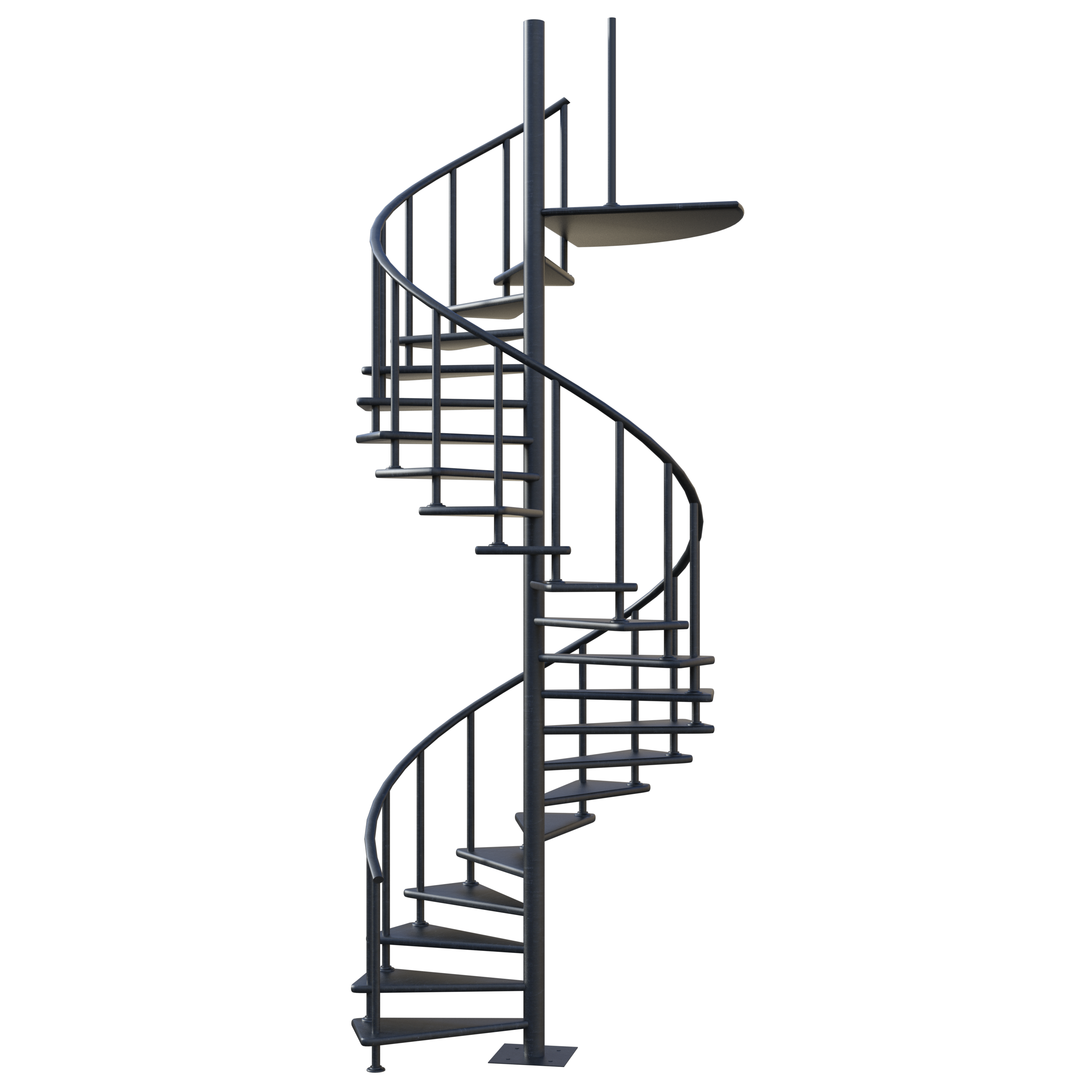
When you wind a staircase around a central pole you are doing the same thing — climbing a great height through a small circular opening.
The golden ratio connection
Many natural spirals grow by a fixed proportion each turn. That proportion is often close to the golden ratio (about 1.618), which appears in the geometry of shells and in classical architecture. Designers have used these proportions for centuries because they feel harmonious to the eye.
A spiral stair doesn't need to follow the golden ratio to be safe, but the underlying rule is the same: make each step an equal, predictable share of the full turn, and the result feels natural to climb.
What this means for your stairs
- Use regular step angles — irregular wedges make people trip.
- Keep the useful tread measured on the walking line, not at the outer edge.
- The narrower the inner end of the step, the more the handrail matters.
Want to put the geometry to work? Learn how to calculate a spiral staircase, then make sure every step follows Blondel's comfort rule. And if you are curious how the shape travelled from castles to homes, read who invented the spiral staircase.