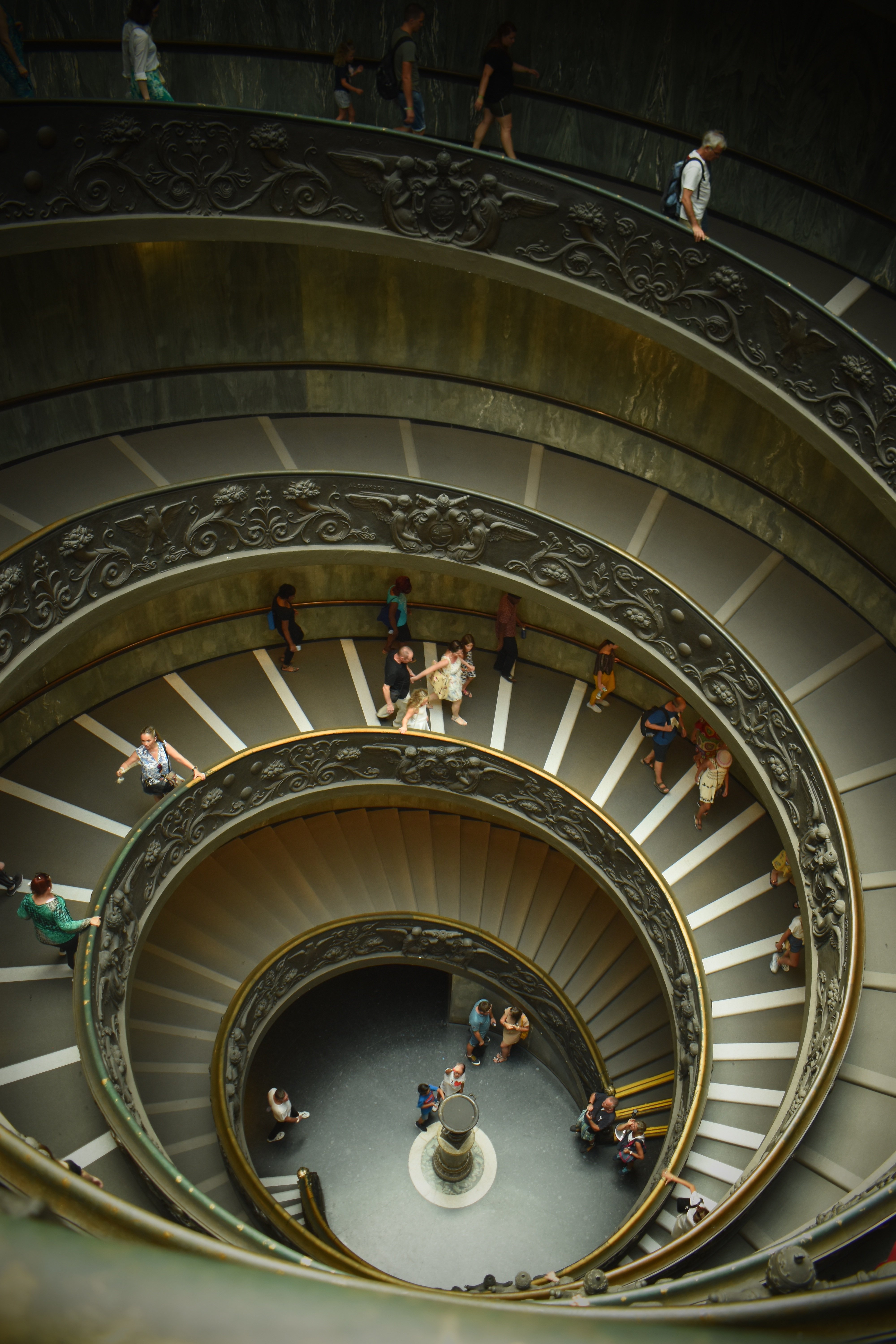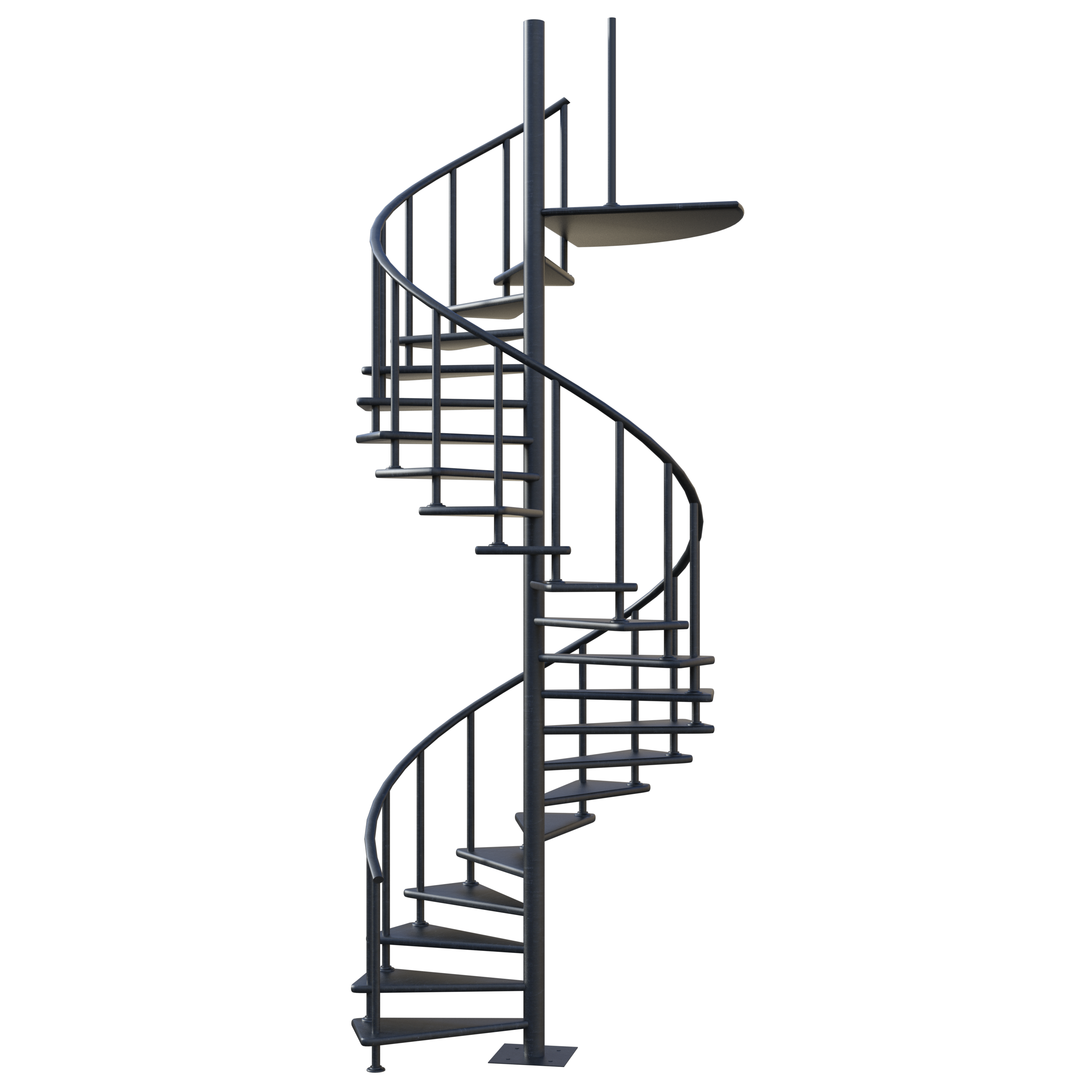
Staircases are so universal today that we forget they are one of humanity's oldest inventions. In this guide you will discover where the first steps appeared, how ancient builders measured them, and why that geometry still shapes the spiral staircase you can design in our calculator.
The oldest steps ever found
Purpose-built steps appear in the archaeological record around 9,000 years ago, in the Pre-Pottery Neolithic settlement of Jericho. Builders set large stone slabs into the ground to reach rooftops and the top of a defensive tower — an early proof that a constant step height makes climbing safe and comfortable.
Later cultures turned steps into architecture:
- Egyptians inserted long stepped galleries inside pyramids, so stone blocks could be hauled upward.
- Greeks and Romans designed stone theatres, public buildings and the first monumental ramps and circular staircases.
- Medieval masons carved narrow center-pole (newel) stairs inside castle walls — the direct ancestors of today's spiral staircases.
From rock-cut passages to the spiral
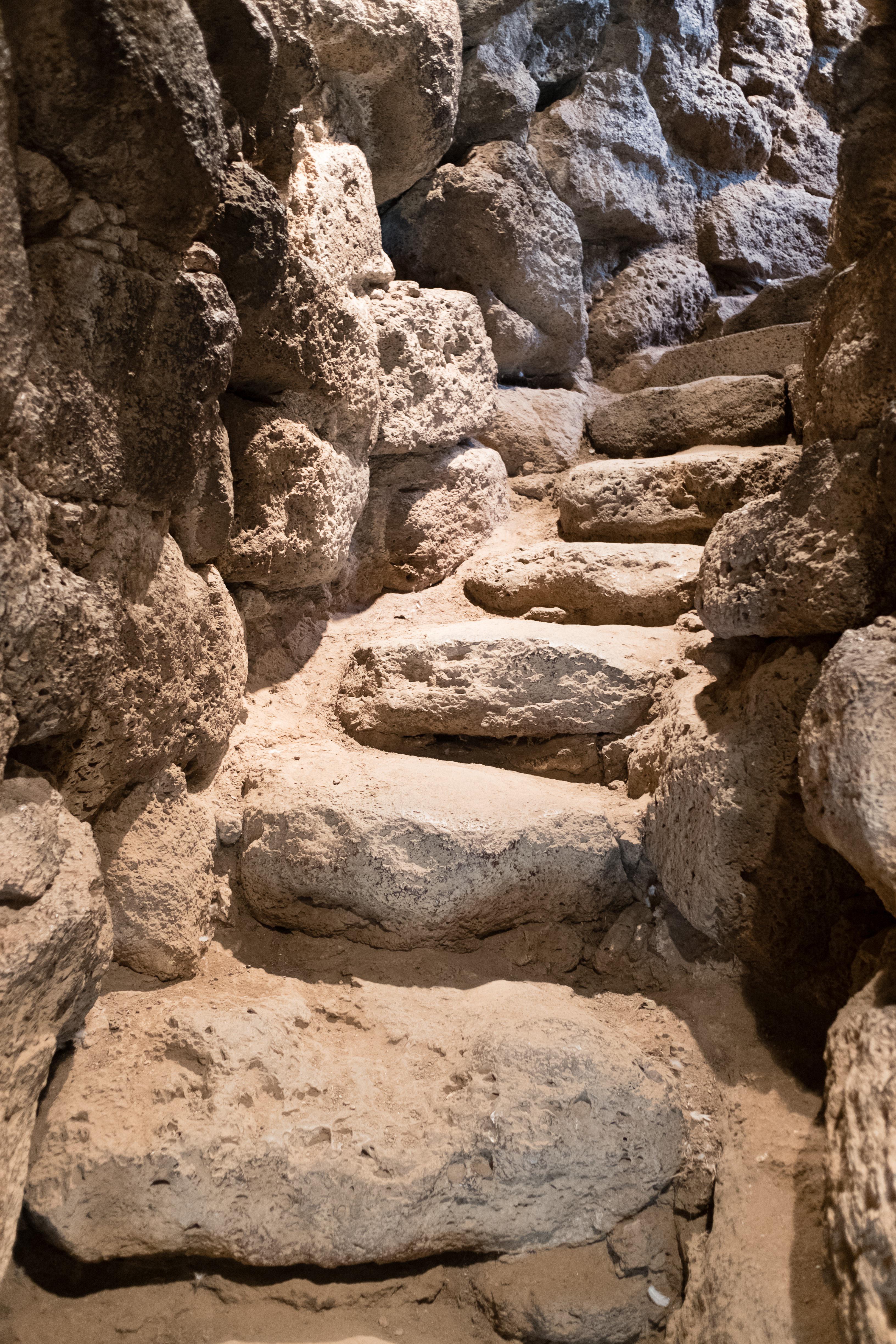
The image above shows stairs carved directly from rock. People solved the same problem we solve today: moving between levels in a narrow footprint. When space is tight, the answer is geometry — a circular or spiral plan that climbs while turning.
If you are building your own, read how to calculate a spiral staircase step by step, or explore who invented the spiral staircase and how it evolved from castle defence to elegant design.
Every stair you walk on today carries a 9,000-year-old idea: divide the climb into equal, predictable steps.