Spiral staircases get a bad reputation for safety, but a well-built one is perfectly safe. What causes accidents is poor design — irregular steps, slippery treads, low headroom or a missing handrail. Here is the checklist.
1. Even risers and predictable steps
Human balance expects each step to be identical. Keep the real riser equal on every step and avoid sudden variations. Uneven step heights are one of the most common causes of falls on any stair — spiral or straight.
2. Handrails on both edges
On a spiral stair the useful tread is narrow, so a handrail on the outer edge is essential and one on the inner side is strongly recommended. The railing height is typically 90–100 cm measured from the step nosing. Check that it is continuous, without gaps at each step change.
3. Headroom
Bump your head once and you'll never forget it. Keep a clear headroom of at least 200 cm (some codes allow 198 cm for spirals) measured over the full turn. The geometry of the upper floor edge matters — our calculator checks real 3D headroom, including tilted axes.
4. Slip-resistant treads
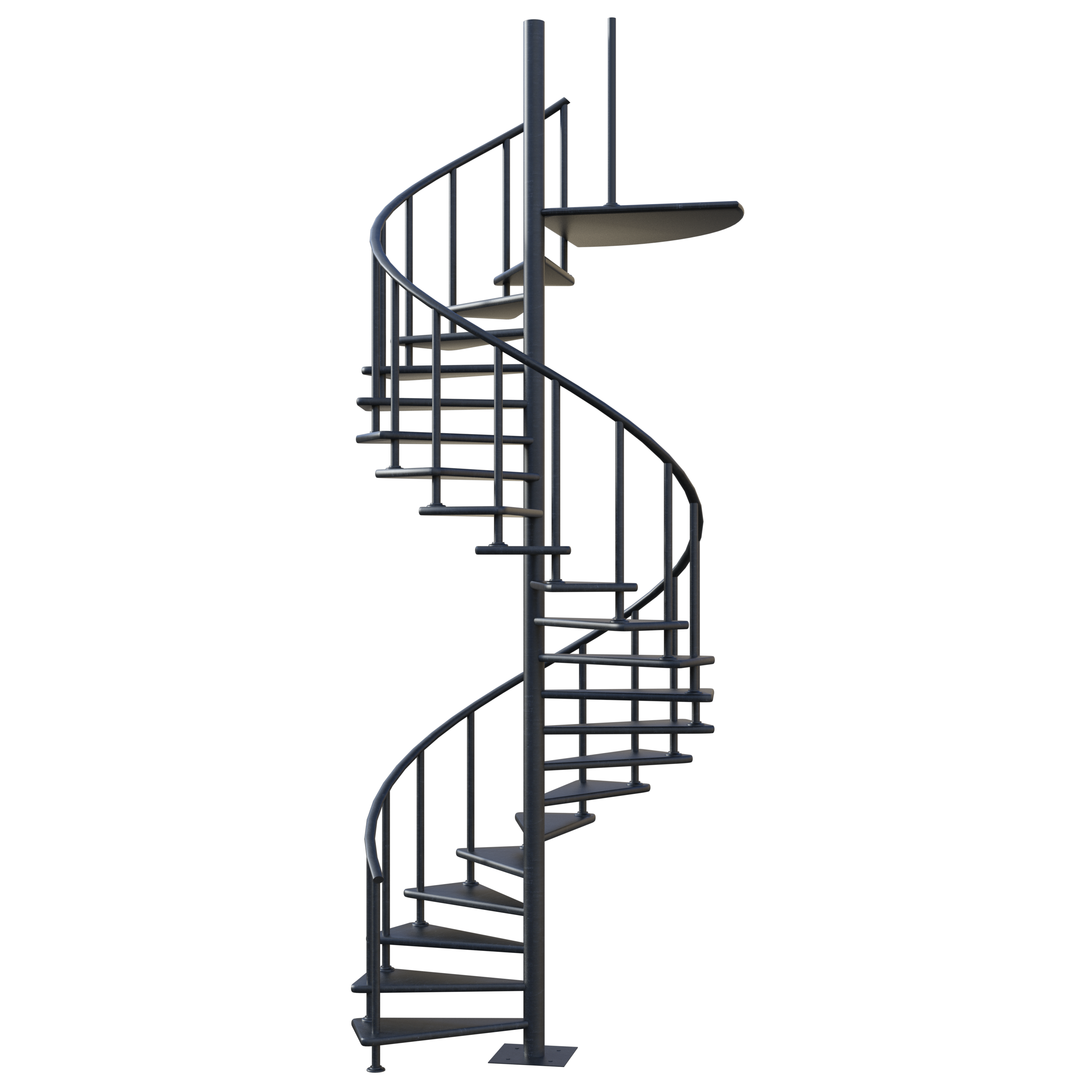
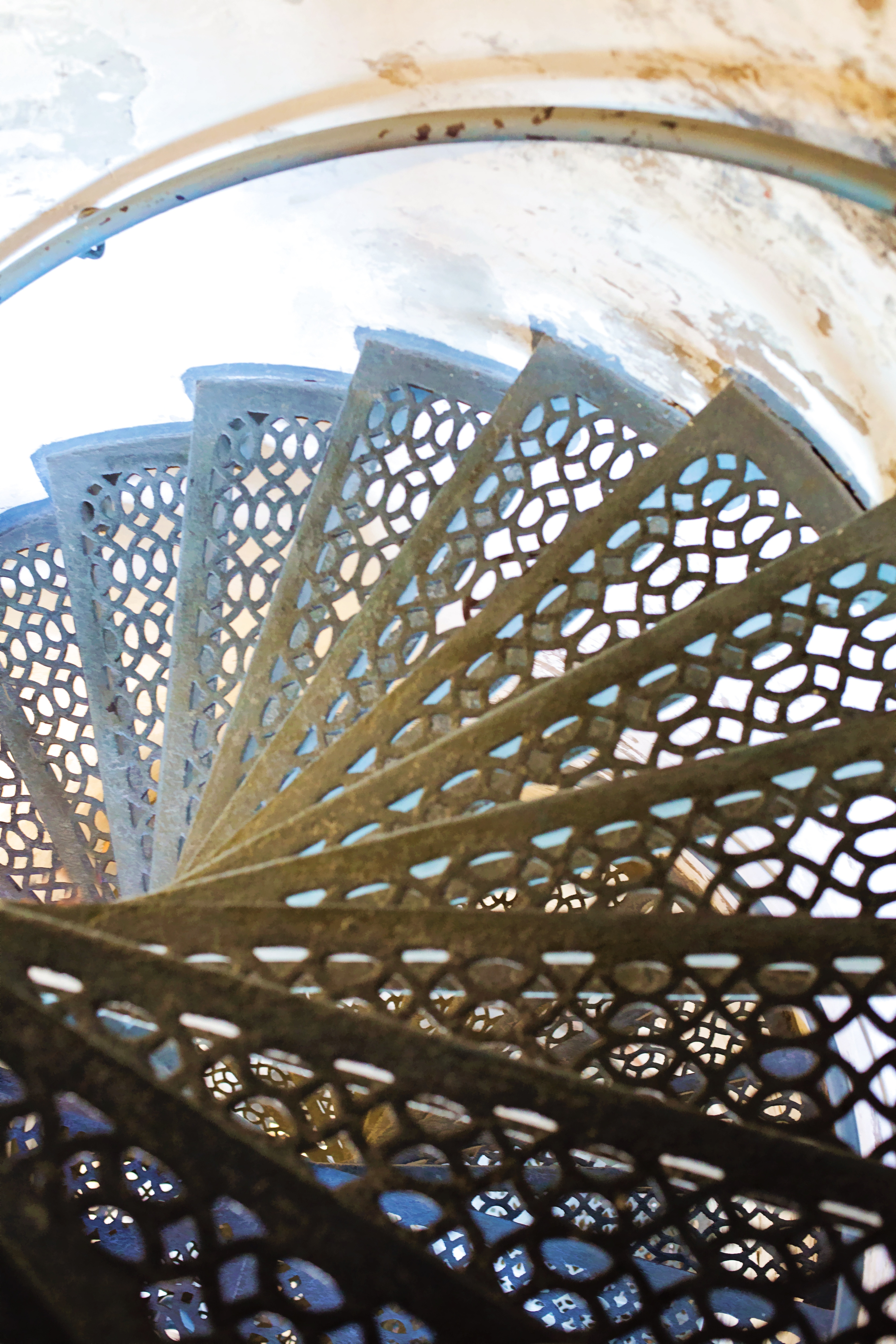
Outdoor or frequently used stairs need grip. Choose non-slip nosings or anti-slip tape, keep wood oiled or sealed, and avoid highly polished metal underfoot. If the stair has open risers (like the one in the photo), make sure gaps can't trap small feet or heels.
5. Width and children
Spiral stairs are often allowed as a secondary or access stair (e.g., to a loft or mezzanine), not the main stair. If children use it, add a second lower handrail and close open risers.
Safety rule of thumb: equal risers + real tread + continuous handrail + 200 cm headroom + grip underfoot = a spiral staircase people will use for decades without incident.
For the numbers behind each of these points, start with how to calculate a spiral staircase and Blondel's comfort rule. Then compare materials that keep steps grippy and easy to maintain.