In 1675 the French architect Nicolas-François Blondel published a surprisingly simple rule that builders still use today: a stair is comfortable when twice the riser plus the tread equals a natural walking step.
The formula
For example, a stair with 17.5 cm risers and 28 cm tread gives 2 × 17.5 + 28 = 63 cm — textbook comfort. If the result is far below 60 cm the stair feels tiring; far above 66 cm it feels rushed or unsafe.
Applying it to spiral staircases
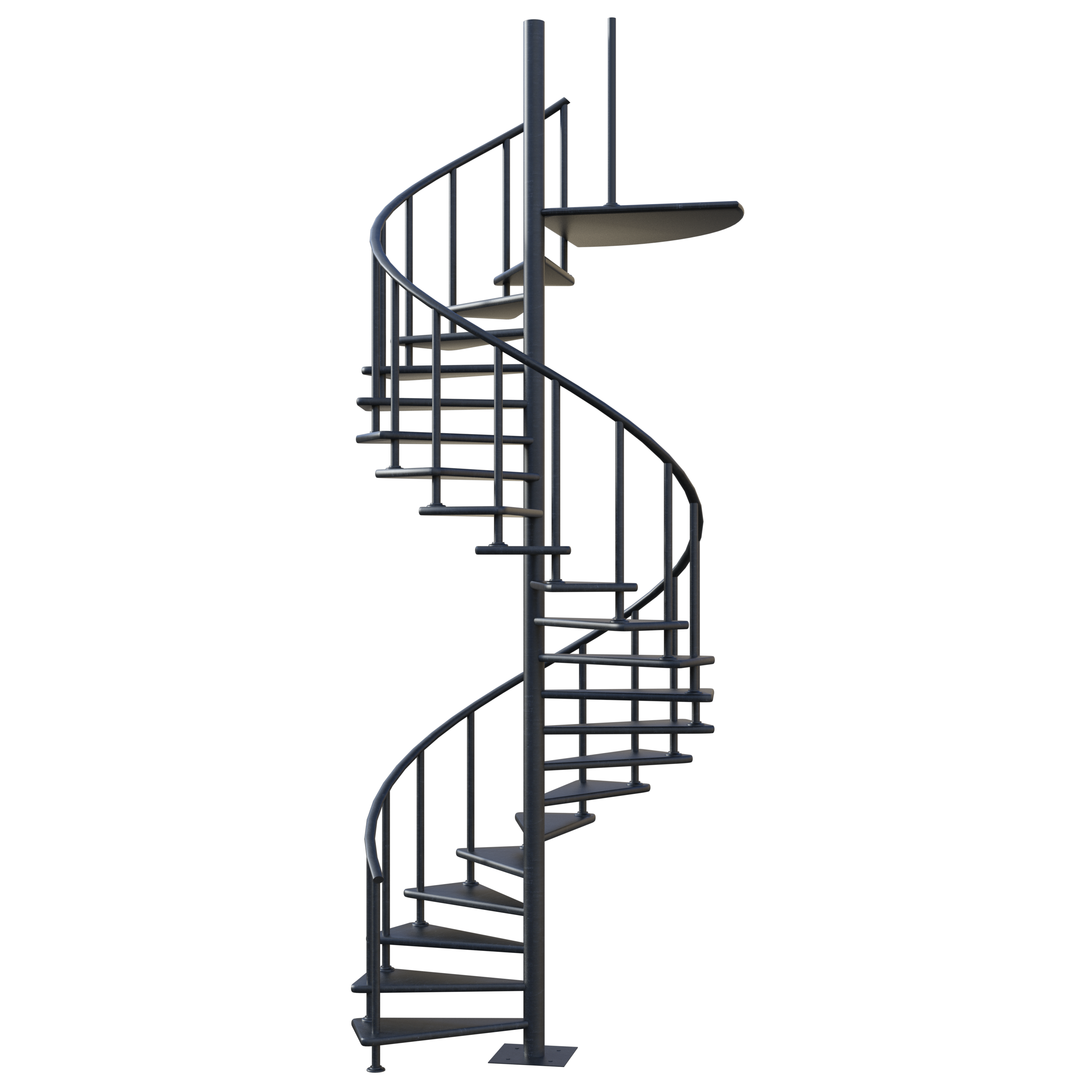
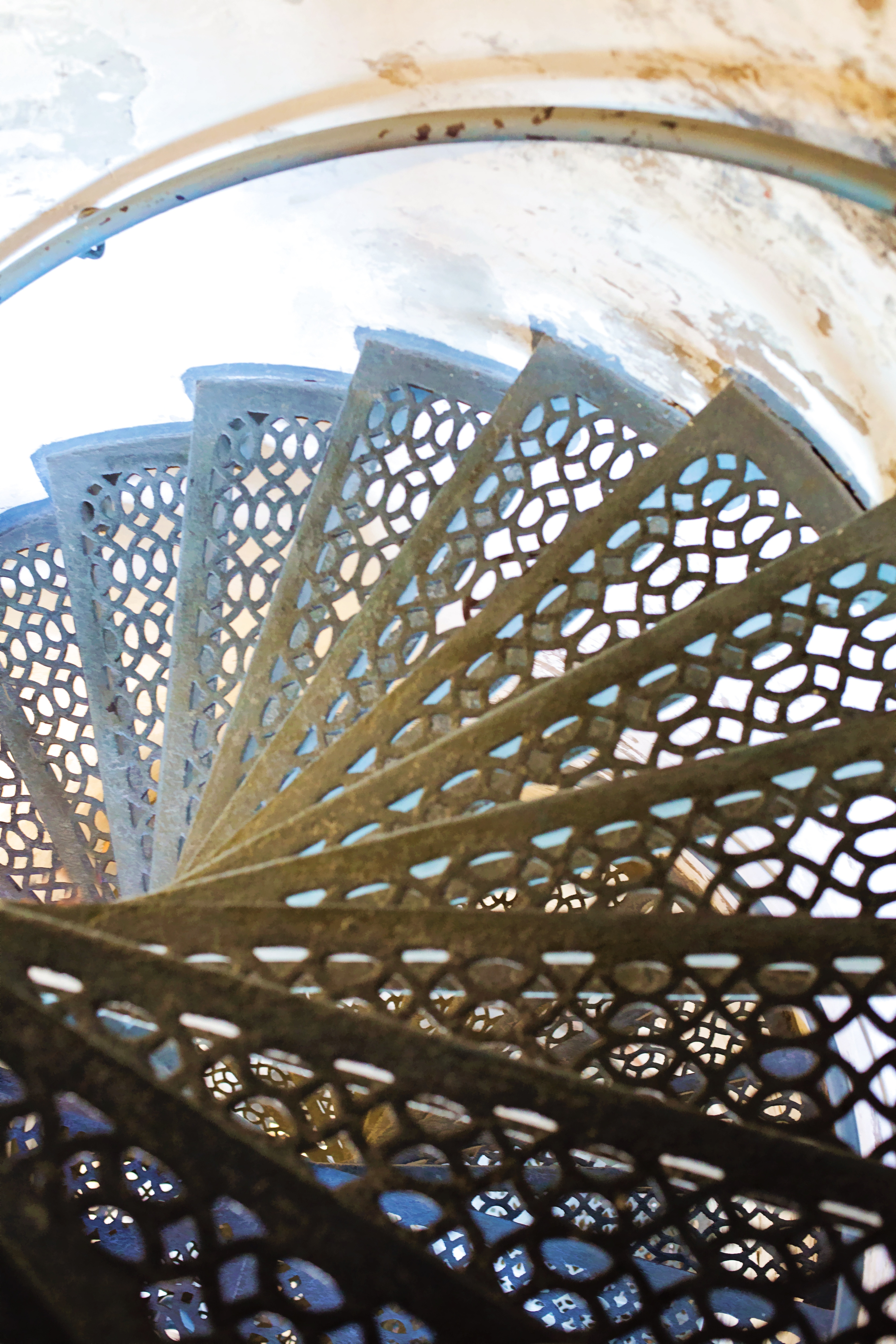
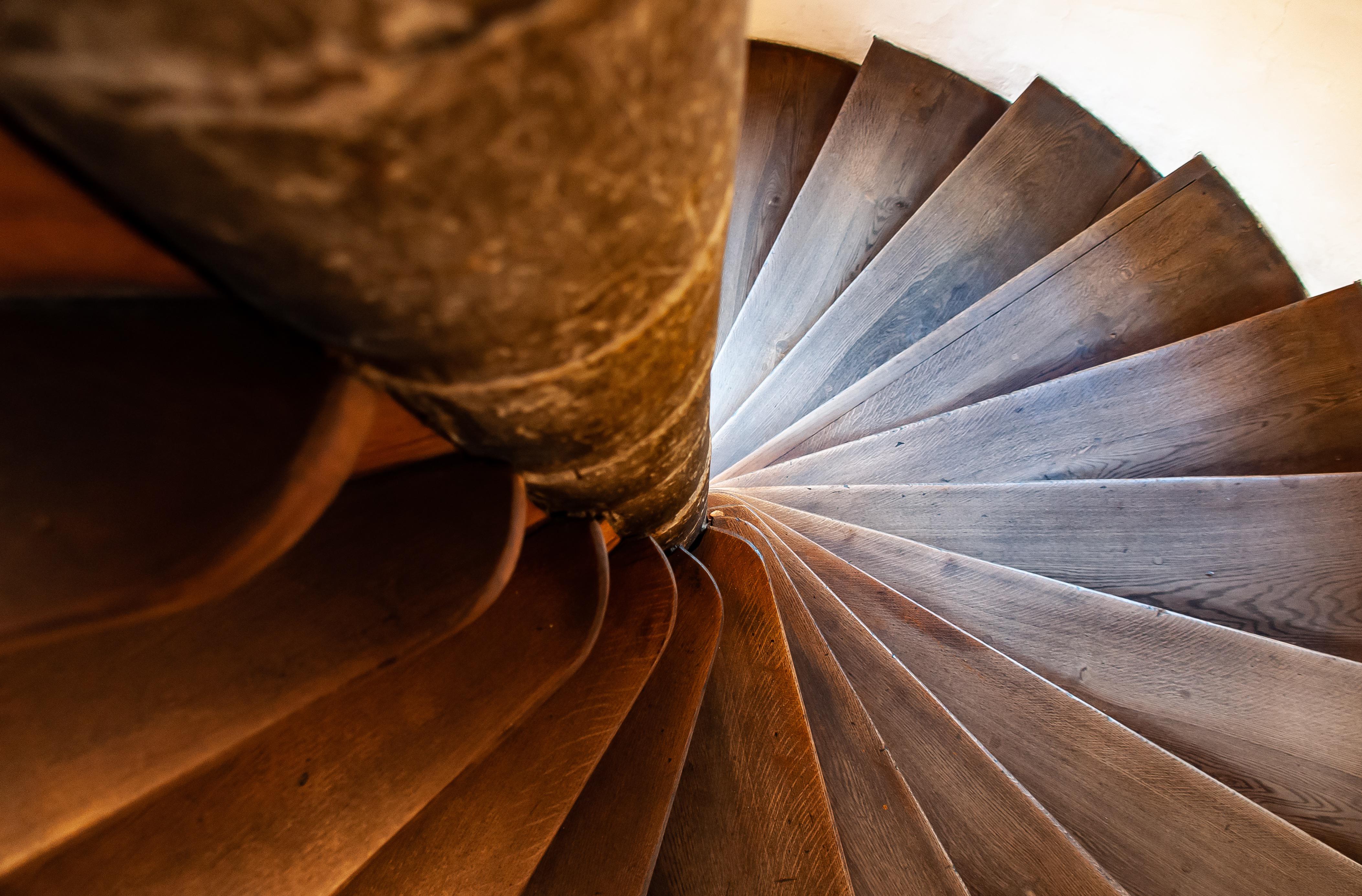
On a spiral staircase the tread is wedge-shaped, so Blondel's rule is applied to the useful tread measured on the walking line (about two-thirds of the radius from the centre). What matters is not the deep outer end of the wedge but the part your foot actually steps on.
- Measure the tread on the walking line, roughly ½–⅔ from the centre pole.
- Use the real riser (total height ÷ number of steps), not the target riser.
- For a compact spiral the usable tread is often narrower; keep it at least 20–25 cm and compensate with a gentler riser where you can.
Comfort ranges worth remembering
- Riser: 15–19 cm (spiral stairs are often allowed a little more when space is tight).
- Useful tread on the walking line: 20–30 cm.
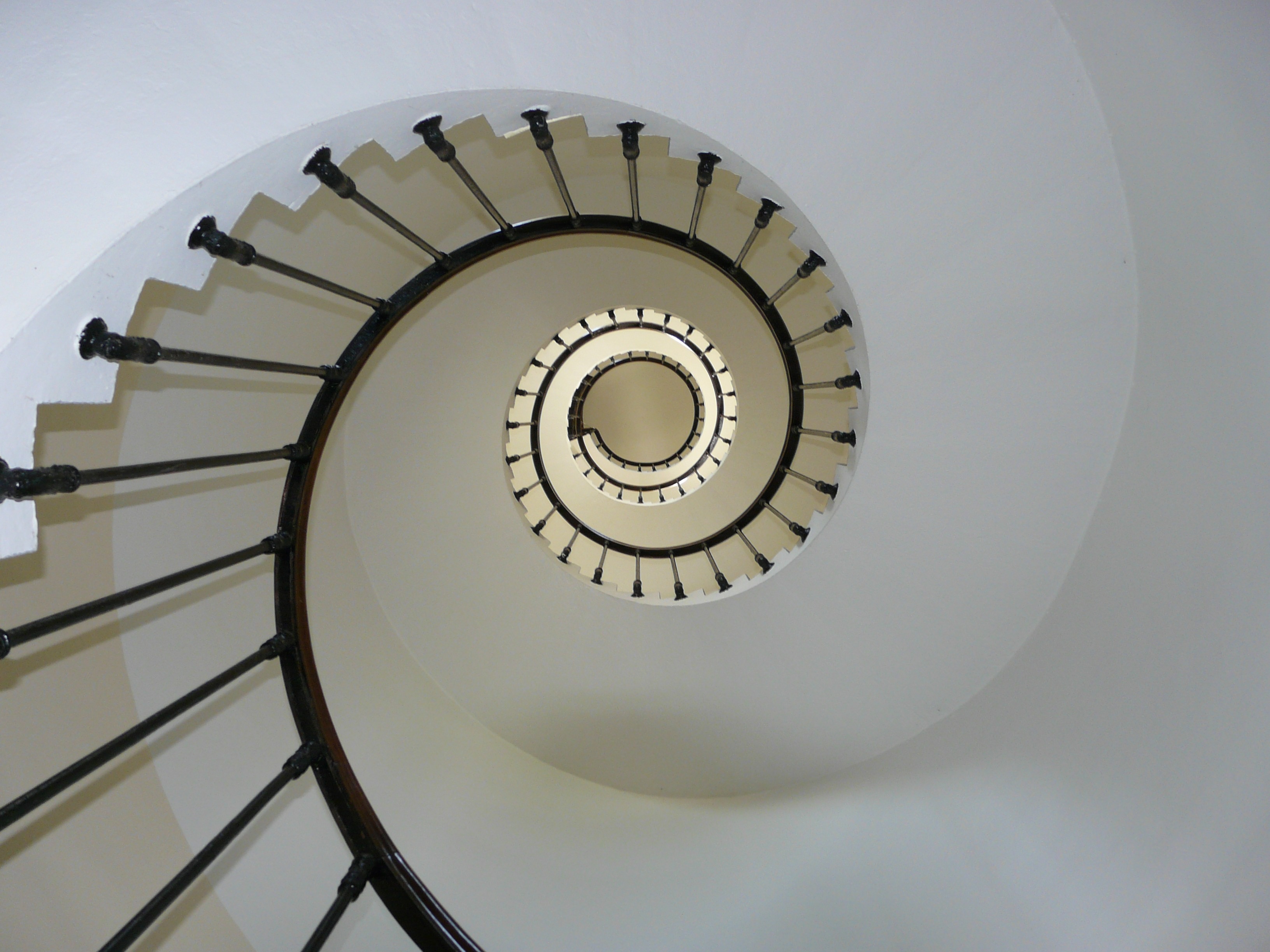
- Steps per 360° turn: 9–20.
2R + G is a guide, not a law — but when a stair feels "off", this formula usually explains why.
Want to check your own dimensions? Read how to calculate a spiral staircase for the full method, then see our safety checklist and materials comparison to finish the project.