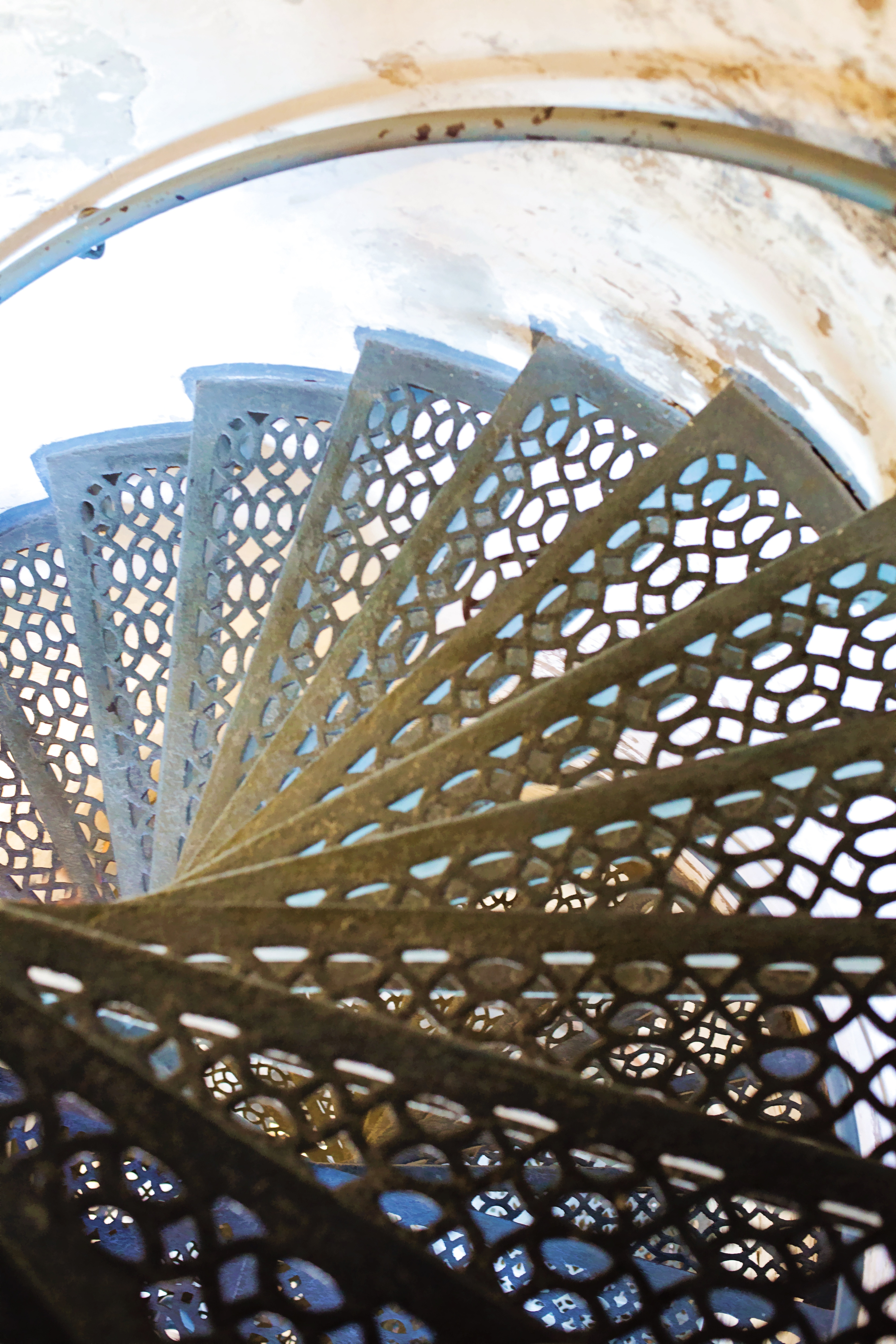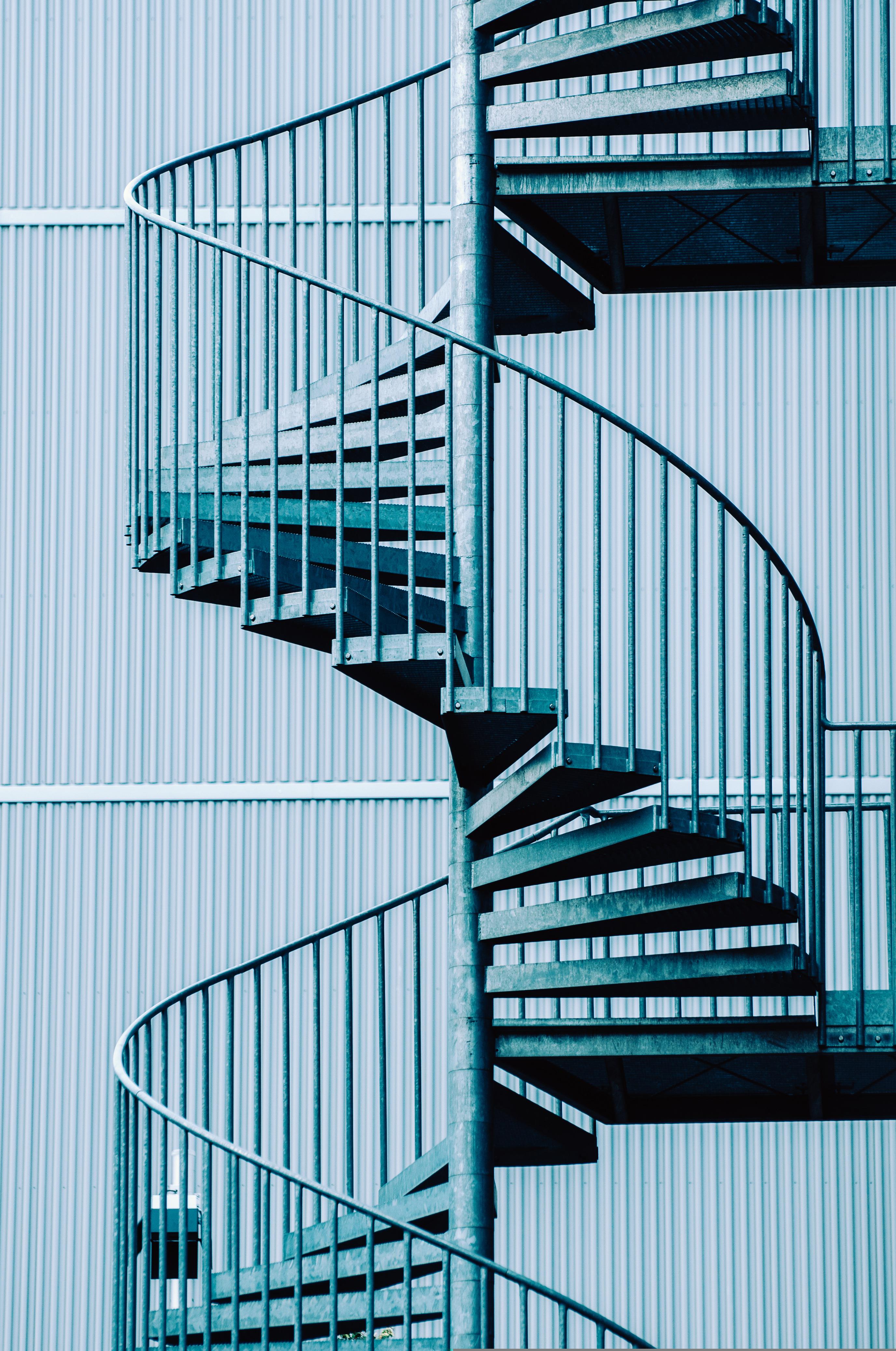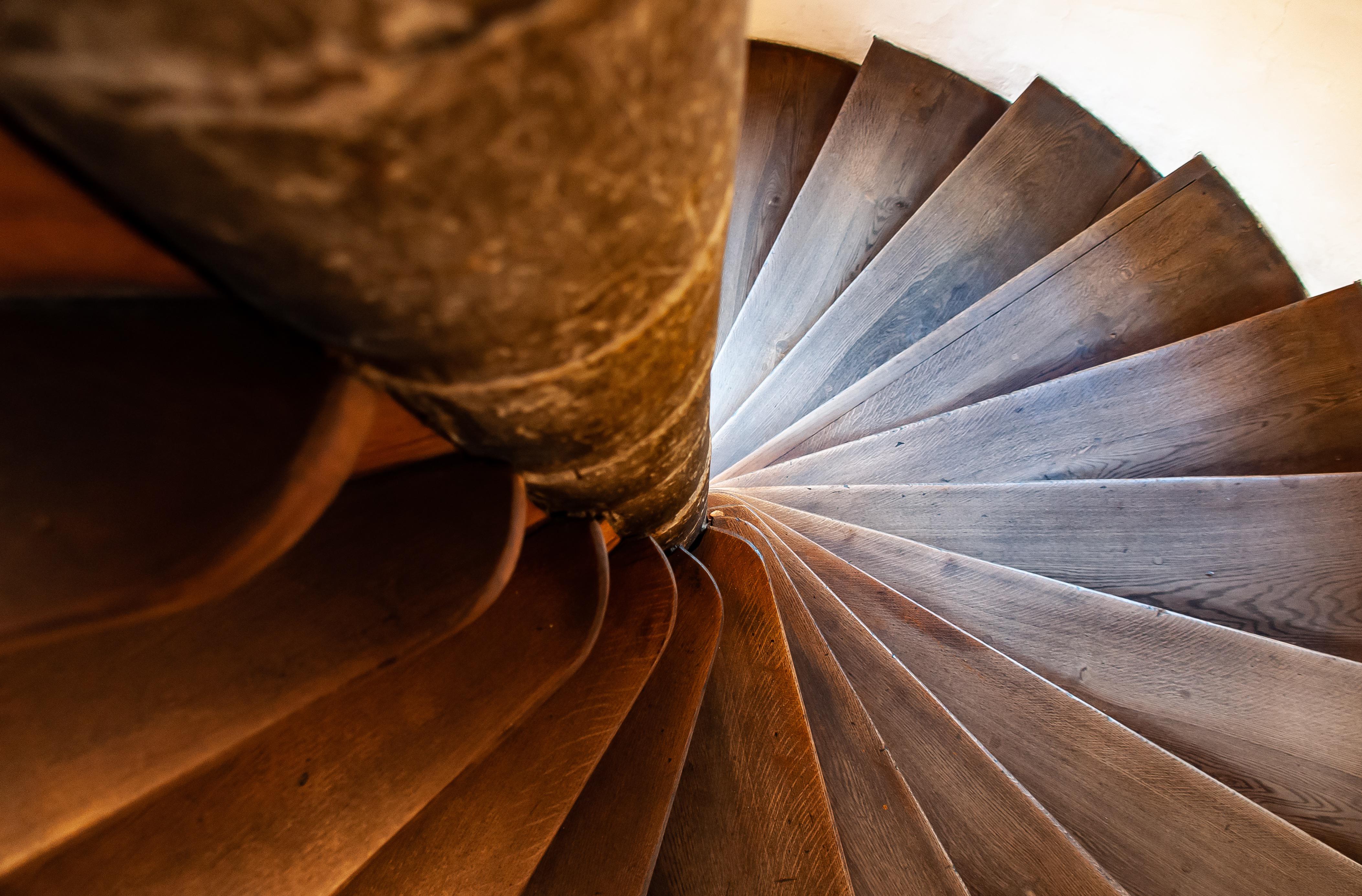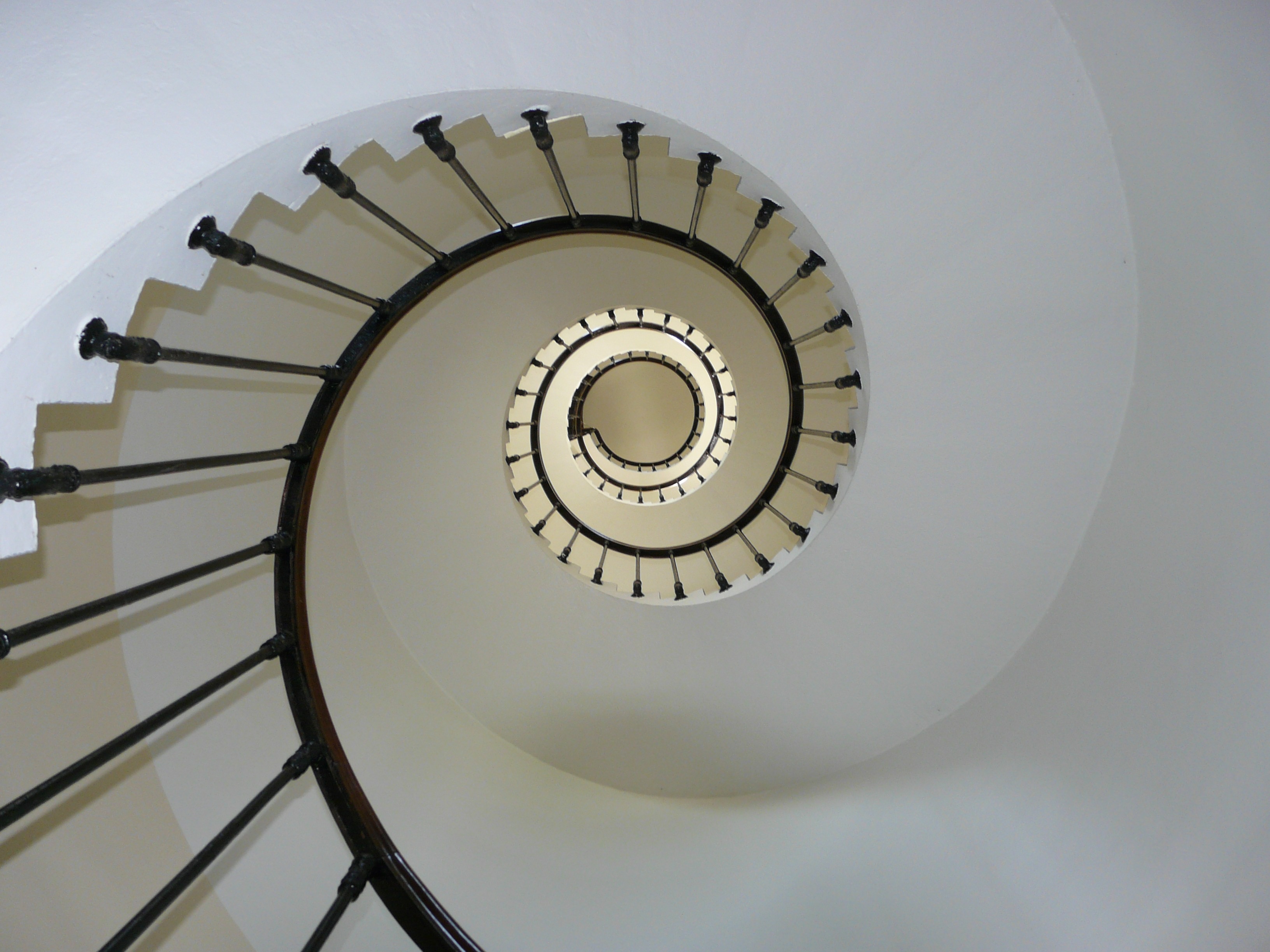
The material changes how your stair looks, sounds and lasts. Here is an honest comparison of the four most common options for spiral and helical staircases.
Steel — strong, slim, industrial
Steel is the default for modern spirals. It is very strong, precise and slim, so treads can be thin and elegant. Finishes range from raw and industrial to powder-coated in any colour. It suits indoor and outdoor use when protected from corrosion.
- Pros: strong, precise, fire-resistant, thin profiles, easy to prefabricate.
- Cons: can feel cold and noisy; needs anti-corrosion treatment outdoors; polished treads are slippery.
Wood — warm and classic
Wood brings warmth and works in almost any interior. A wooden spiral with a central column (like the one in our other guides) is a timeless classic. Oak, beech, walnut and pine all behave differently.
- Pros: warm, quiet, comfortable underfoot, easy to oil or refinish.
- Cons: needs sealing against moisture and wear; more care outdoors; movement over time if not dried well.
Concrete — monumental and durable
Concrete spirals are usually cast on site around a formwork, giving massive durability and fire resistance. They shine in entry halls, public buildings and outdoor settings.
- Pros: extremely durable, fireproof, low maintenance, can be sculpted.
- Cons: heavy (needs a strong structure), expensive formwork, hard to change later, cold to the touch.
Glass and hybrid options
Glass treads or balustrades look stunning and let light through small spaces. Hybrids (steel structure + wood or glass treads) are very popular for home spirals.
- Pros: light, modern, visually open.
- Cons: glass scratches and shows fingerprints; needs frequent cleaning; higher price.
There is no single "best" material — only the best material for your budget, climate and style. Whatever you choose, read the safety checklist and verify your sizes in how to calculate a spiral staircase.
Still deciding on the layout? See spiral vs straight stairs and learn how materials affect step comfort in Blondel's rule.