A staircase is the most used piece of furniture in many homes — and the hardest to redesign later. Whether you choose a straight flight, a curved showpiece or a compact spiral, these design tips will make it work.
1. Design the proportions first, the looks second
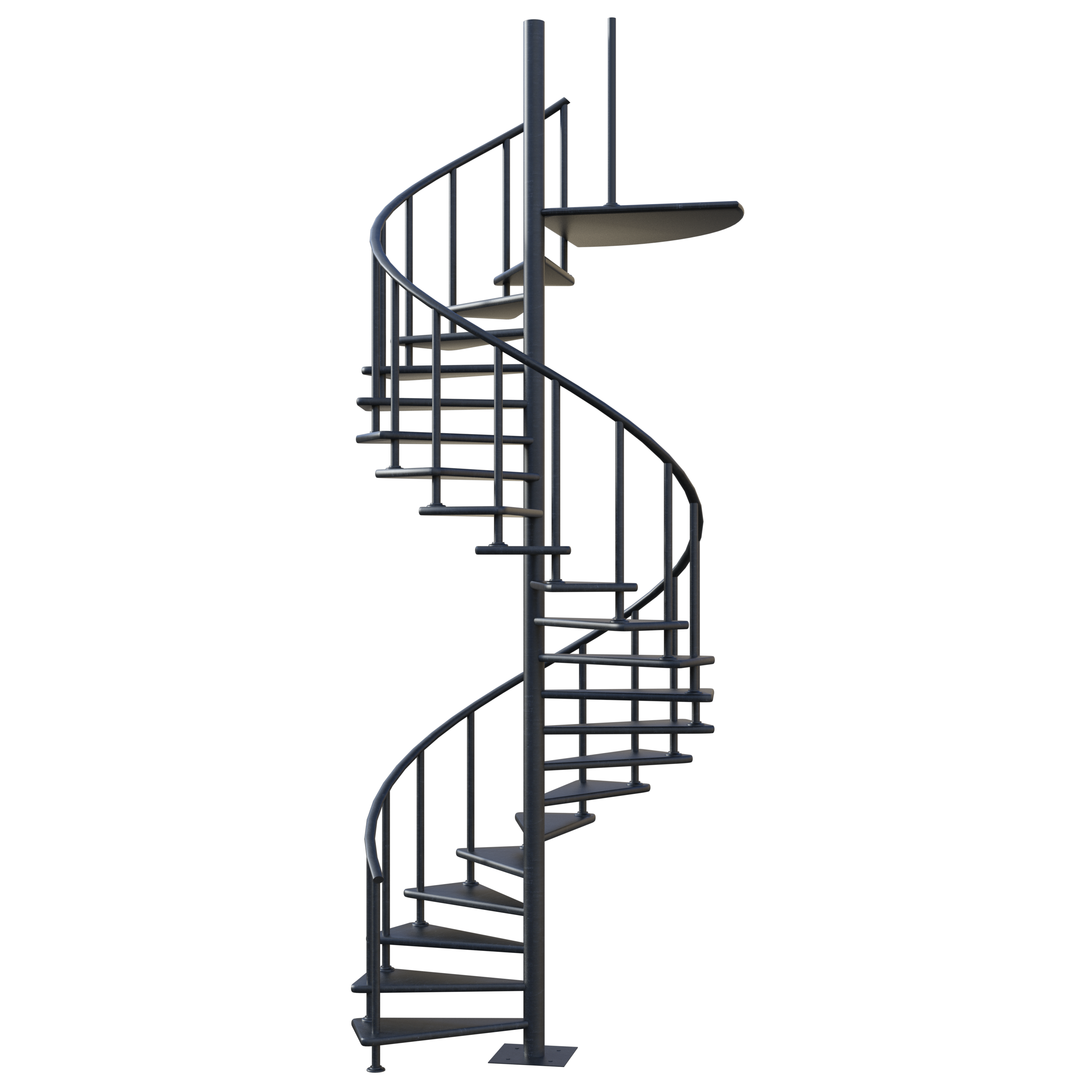
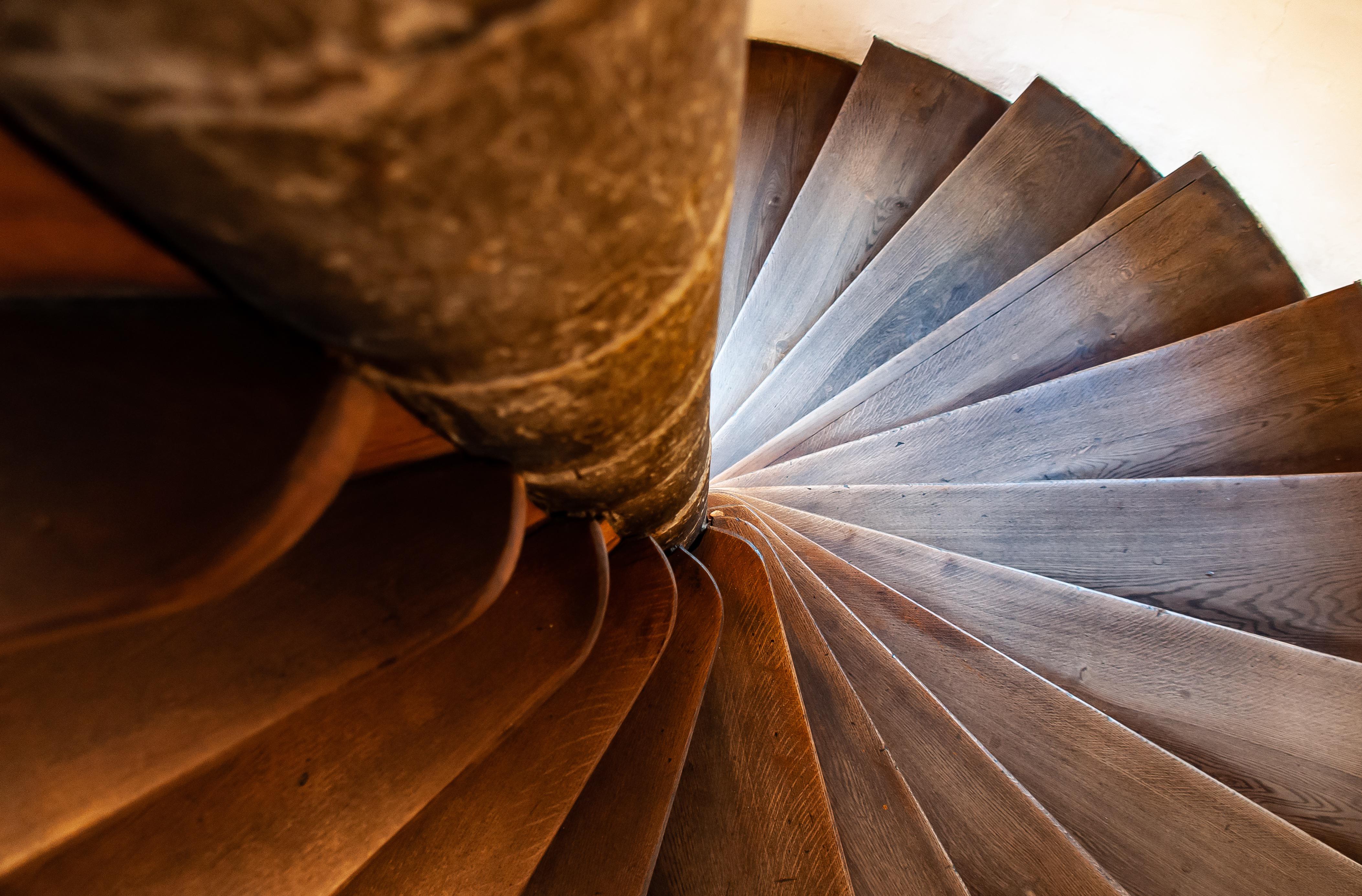
Beauty follows comfort. Fix the riser, tread and headroom before choosing finishes. On a spiral stair, keep the useful tread wide enough on the walking line and the riser low enough for daily use. See Blondel's rule for the formula.
2. Let the staircase do double duty
- Storage: the space under a stair (or inside a wide spiral column) is perfect for drawers, a wine rack, a reading nook or a small office.
- Library: the wall beside a stair is a natural bookshelf, as the grand historic staircases show — shelves follow the pitch of the steps.
3. Bring in light
Stairs can feel like dark tunnels. Add natural light with a window on the landing, a skylight above the stairwell, or glass balustrades. For a spiral, a glazed section on the outer curve makes the whole space feel bigger.
4. Match the staircase to how people actually move
- If the stair is the main route, choose the widest comfortable design and avoid tight turns.
- If it is a secondary stair (loft, mezzanine), a compact spiral is fine — read the small-space guide.
- Always leave enough landing space at top and bottom to open doors and step aside.
5. Don't forget the handrail
A beautiful rail is also the main safety device. Keep it continuous, at the right height (90–100 cm), and comfortable to grip — on both sides of a spiral. Details matter as much as dimensions.
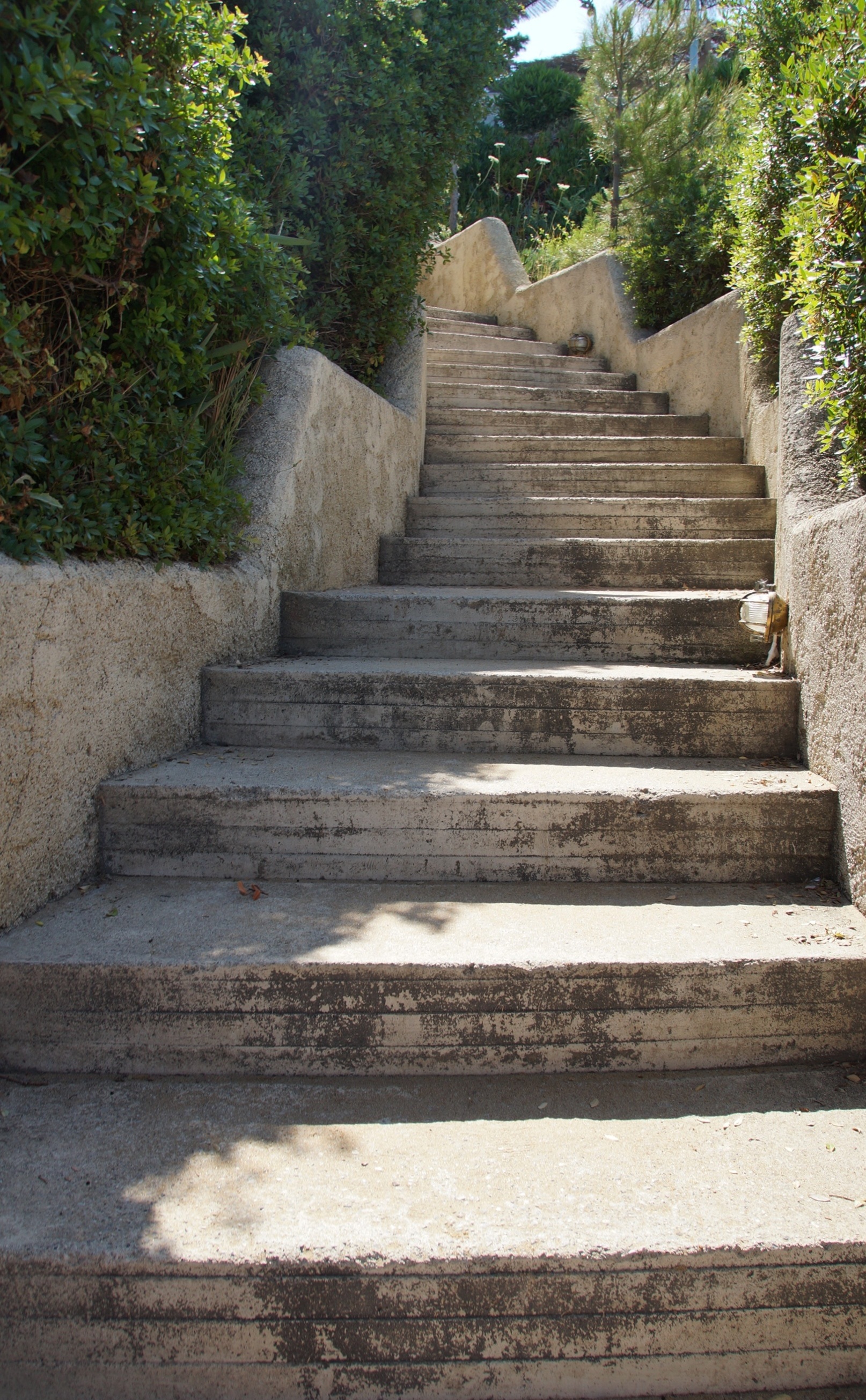
The best staircase disappears into daily life: comfortable to climb, useful underneath, bright to look at and safe in every weather.
Get the numbers right first in how to calculate a spiral staircase, compare spiral vs straight, and finish with the safety checklist.