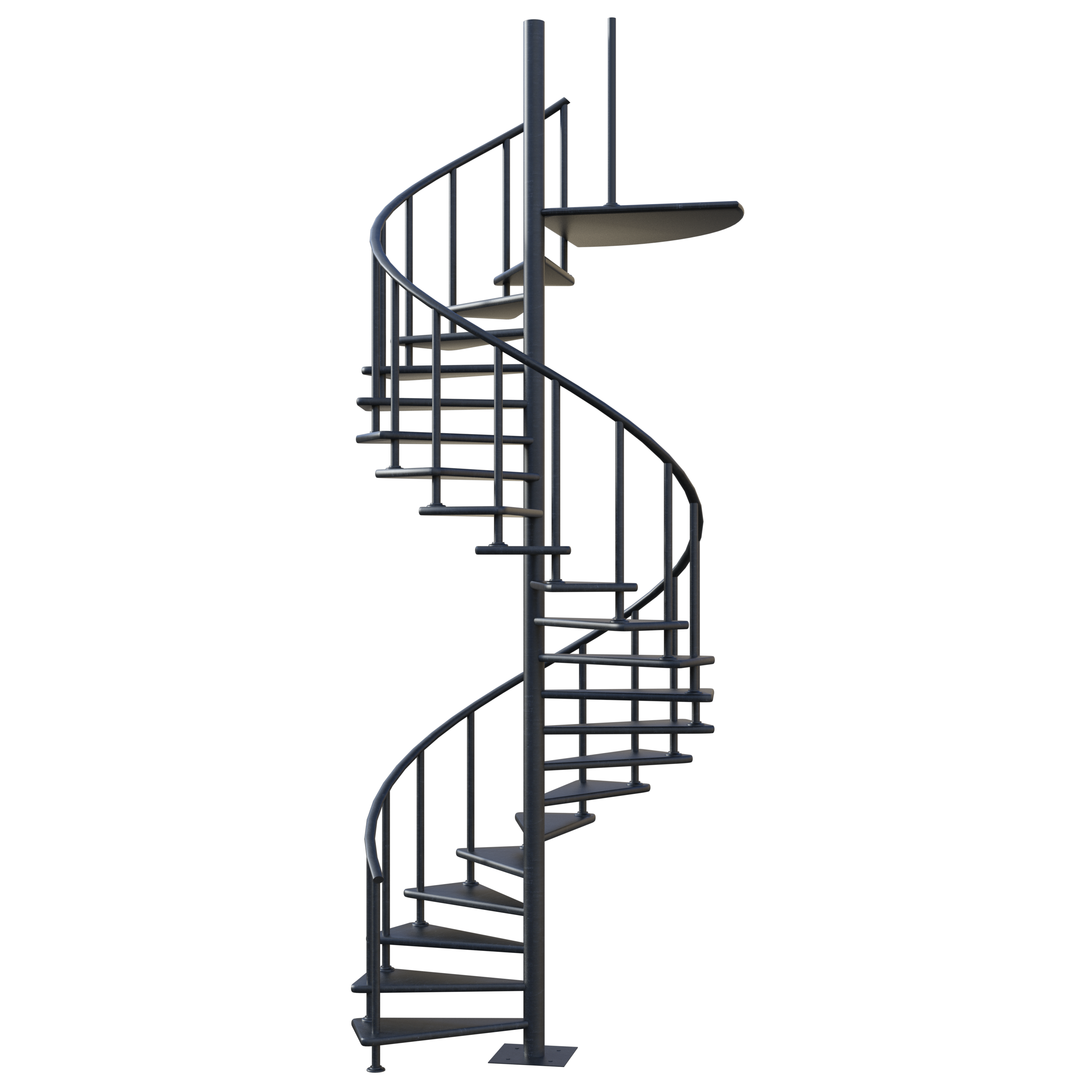
Most homes will fit either a straight or a spiral staircase — so how do you choose? The honest answer is: it depends on the space, the users and the feel you want. Here is a practical comparison.
Straight stairs: simple and spacious
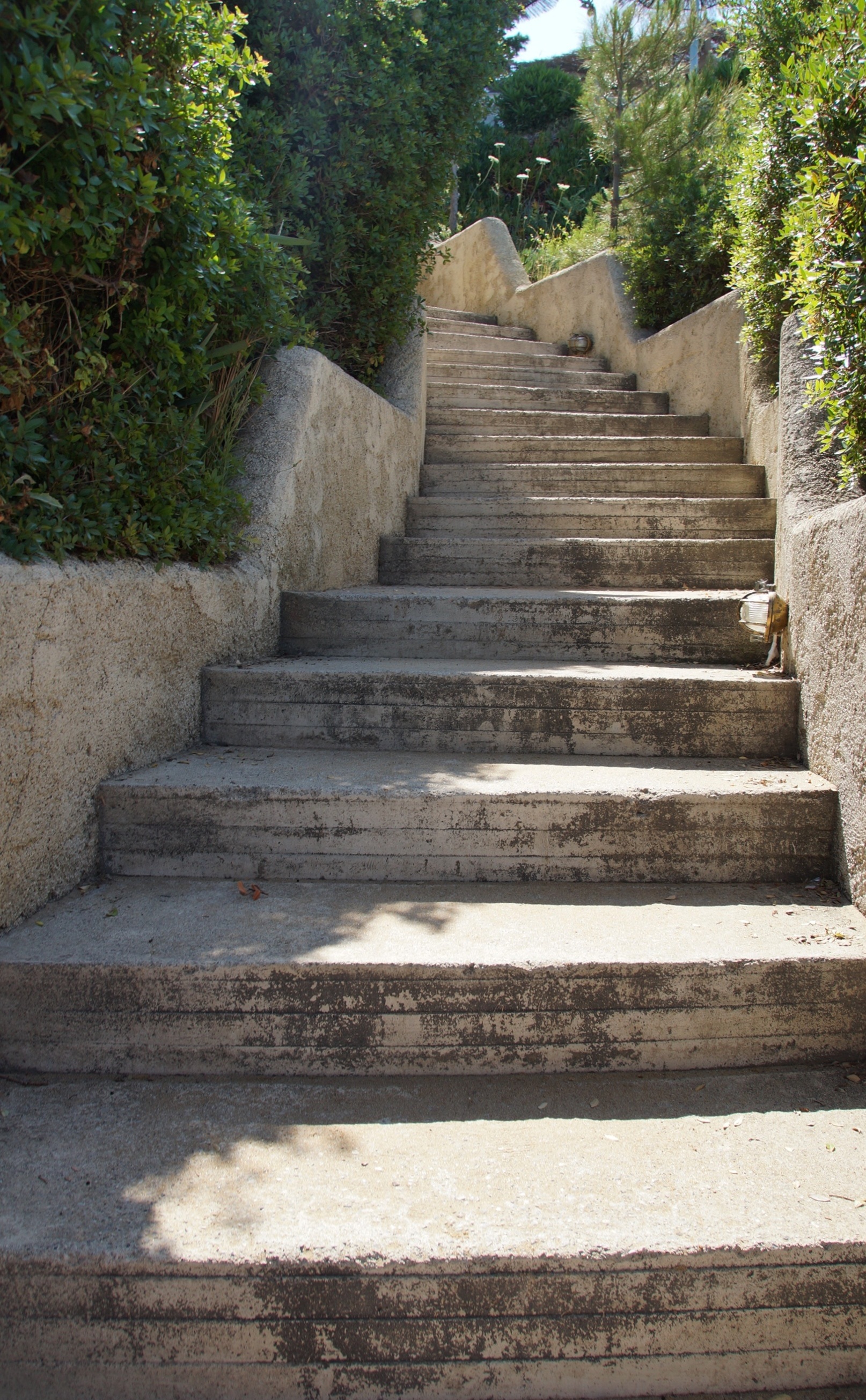
A straight flight (like the outdoor concrete steps above) is the easiest to build, walk and carry furniture on. Every step is the same full rectangle, which makes it very safe and very code-friendly.
The catch is space: a straight flight needs roughly 4.5 m of clear horizontal run to climb a typical 2.8 m floor. That is a lot of floor area in a small home.
Spiral stairs: compact and characterful
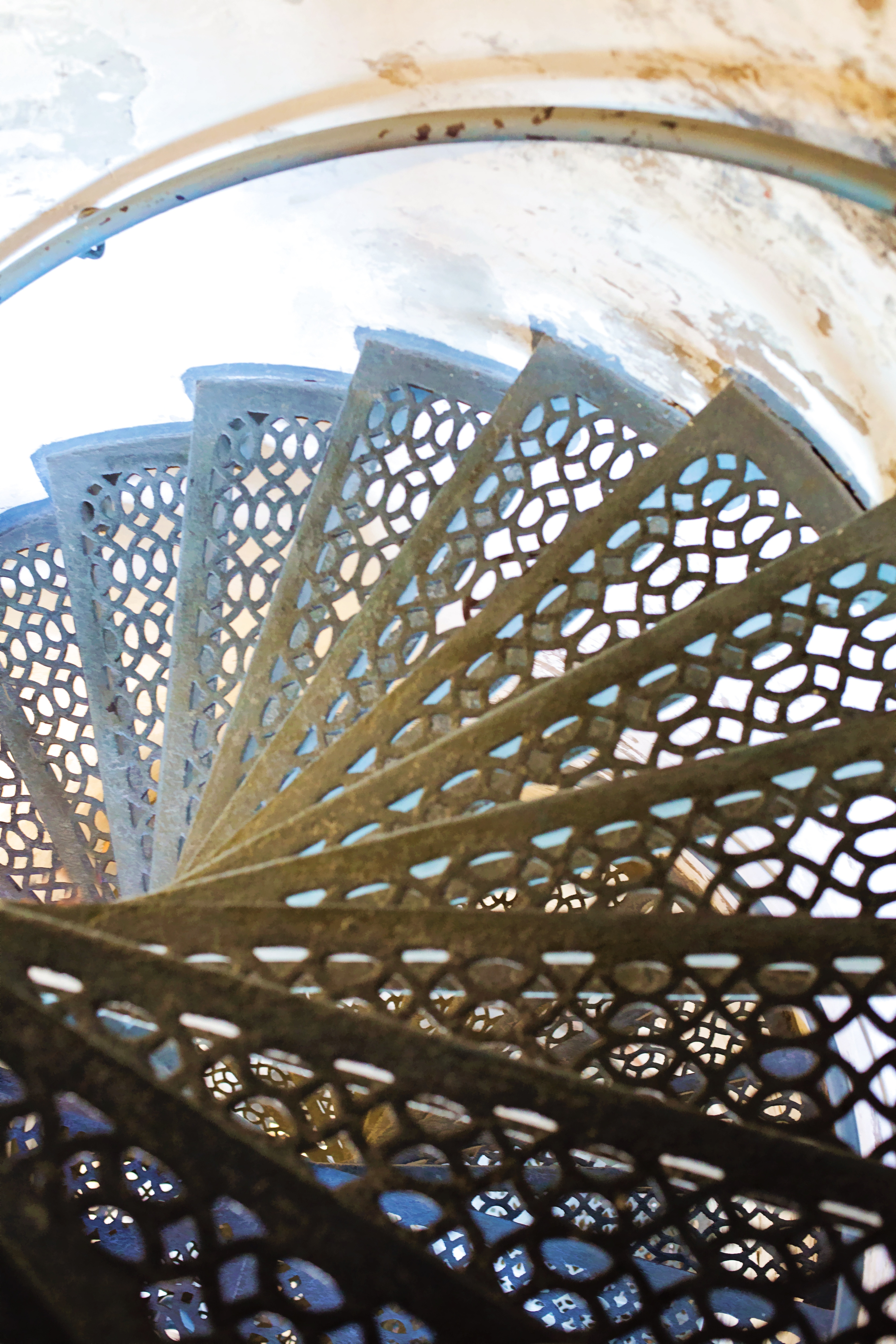
A spiral staircase climbs the same height inside a circle that is often just 1.4–1.8 m in diameter. It saves an enormous amount of floor space and becomes a design feature on its own.
The trade-offs are real: wedge-shaped steps, a narrower useful tread, and a steeper climb. That is why spiral stairs suit adults and spaces where a full staircase won't fit, and why they need a good handrail on both edges.
Quick comparison
- Footprint: straight stairs need a long run; spiral stairs need a small round hole. Spiral wins for tight floor plans.
- Comfort & safety: straight steps are easier and safer for children, older people and carrying loads. Spiral wins on style, not ergonomics.
- Cost: a compact spiral kit is often cheaper than a full straight staircase in wood or steel, but labour for a custom one can be higher.
- Furniture: moving sofas and beds is far easier on a straight stair.
Rule of thumb: if you have the floor length, choose straight. If you don't, a well-designed spiral — correct riser, generous tread, good handrail — is a perfectly safe alternative.
Need a middle ground? Read about compact spiral staircases for small homes, check the numbers in how to calculate a spiral staircase, and always review the safety checklist before buying.